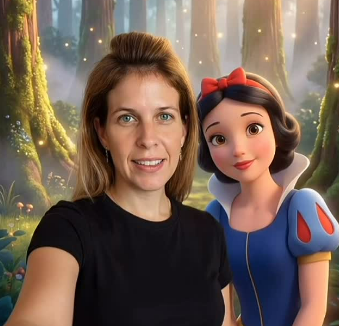
In the modern design landscape, you are no longer just choosing between the hand-drawn sketch and the pixel-perfect render. You are standing at the threshold of a new era: The Age of Synthesis, combining human creativity with Ai realism.
As a forward-thinking brand or creator, you’ve likely felt the tension between the raw, emotional soul of human art and the hyper-polished, efficient realism offered by Artificial Intelligence.
But here is the secret that top-tier design studios are embracing: it is more than a competition. It’s a partnership.
The Soul in the Machine: Why Human Intuition Matters
When you embark on a creative journey, you bring something a machine cannot simulate such as context, empathy, and intent. AI, for all its processing power, doesn't know why a specific shade of "burnt orange" evokes nostalgia for a 1970s Mediterranean summer. It doesn't understand the subtle cultural nuances that make a brand identity resonate with a specific audience.
You provide the "Why." The human element is the anchor of realism. Without your guidance, AI realism via generated imagery can often fall into the "Uncanny Valley"—looking perfect on the surface but feeling hollow or "off." By injecting your unique perspective and emotional intelligence, you ensure that the output isn't just a digital calculation, but a piece of communication.
Elevating Realism Through AI Mastery
This is where the magic happens for your projects. By utilizing AI as a high-octane engine for realism, you can bypass the technical bottlenecks of traditional rendering and prototyping.
AI realism allows you to:
- Visualize the Impossible: Generate photorealistic textures and lighting environments in seconds that would previously take days of manual labor. Also, create images and videos depicting visuals according to your wildest imagination, such as a lion jumping out of a clock or a woman eating cauliflower ice cream.
- Iterate at the Speed of Thought: You can explore a dozen different creative directions simultaneously, refining the "realism" of a concept before a single physical prototype is ever built.
- Enhance, Don't Replace: Think of AI as the ultimate "power tool." Just as the electric saw didn't kill the carpenter’s craft but allowed for more intricate architecture, AI realism allows you to push the boundaries of what is visually possible.
The Workflow of the Future: A Hybrid Approach
Our company is a sterling example of the excellent way businesses can utilize AI to improve your business and more importantly, your clients' business. At our company, we use a sophisticated feedback loop. We provide creative sparks and technical curation, while AI realism provides computational scale. This creates a creative result that is more real than reality—a hyper-realism that is grounded in human aesthetic standards.
FAQ: Understanding the Human-AI Creative Bond
Does using AI mean the design is less "authentic"?
Absolutely not. You are the architect of the vision. Authenticity comes from the idea and the creative direction. AI is simply the medium. Whether you use a brush, a mouse, or a generative algorithm, the value lies in your decision-making process and the final impact on the viewer.
How does AI improve the "Realism" in design compared to traditional methods?
Traditional 3D rendering requires manual input for every photon of light and every grain of texture. AI models are trained on billions of real-world images, meaning they understand how light interacts with surfaces (subsurface scattering, global illumination) intuitively. This allows you to achieve a level of cinematic detail that feels natural and immersive.
Can AI understand my specific brand "vibe"?
Not on its own. AI is a mirror, not a mind. It requires your specific constraints, brand guidelines, and stylistic preferences to produce something relevant. The "vibe" is a human construct; the AI simply helps you render that vibe into a high-fidelity visual.
Will AI realism eventually replace the need for human designers?
No. While AI can execute, it cannot innovate. It cannot understand "disruption" or "breaking the rules" in a way that feels meaningful. You will always be needed to steer the ship, curate the results, and make the final "executive" choice that defines a great design.
Why This Matters for Your Brand
In a world saturated with generic content, the combination of human-led creativity and AI realism gives you a competitive edge. It allows you to produce high-end, bespoke visuals that look like they cost millions, with a turnaround time that keeps you ahead of the market.
You aren't just using a tool; you are expanding your cognitive reach. You are creating worlds that are tangibly real yet boundlessly imaginative.
Our Commitment to Excellence
As a studio, we specialize in this delicate dance. We don't use AI realism to take shortcuts; we use it to go further. We take your most ambitious ideas and use cutting-edge technology to ground them in a stunning, tactile reality.